
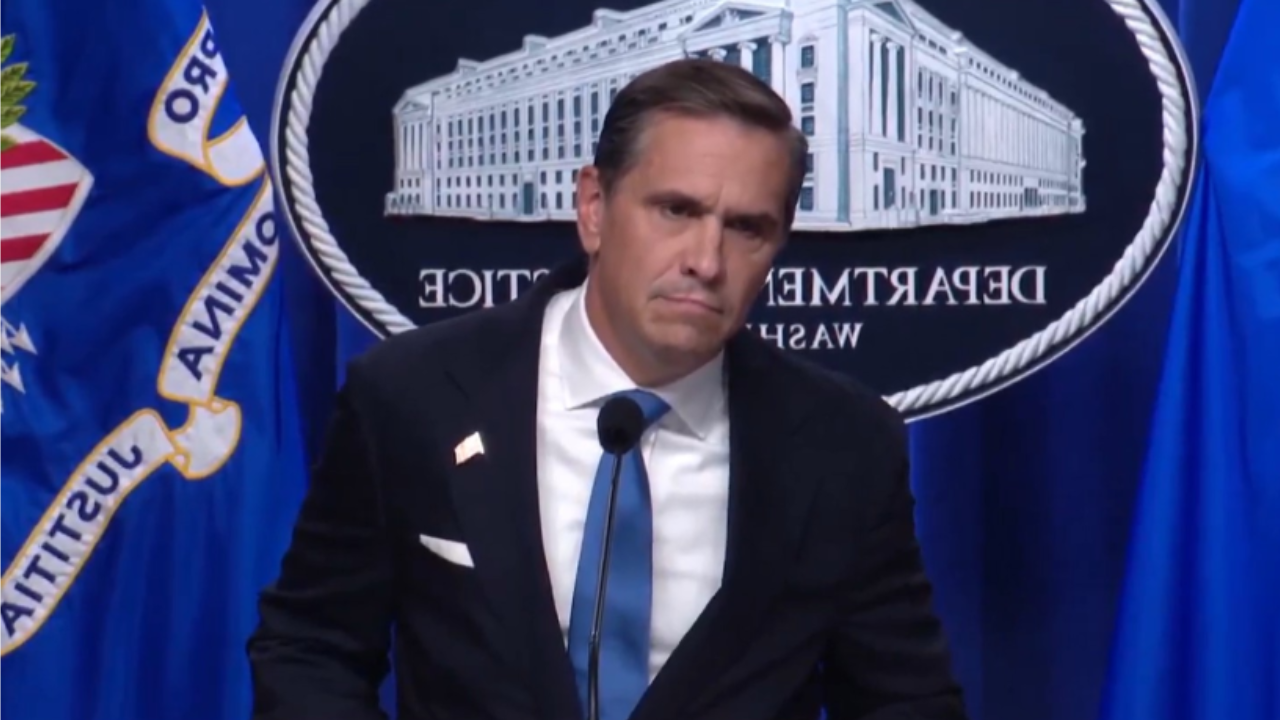
Donald Trump’s Justice Department is moving to abandon its legal challenge to the results of Alaska’s U.S. Senate election, marking a significant reversal in a case the president personally directed his administration to pursue.
On Thursday, federal attorneys asked the Ninth U.S. Circuit Court of Appeals to dismiss the case as moot after Democratic candidate Mary Peltola secured an outright majority of the vote, defeating Republican incumbent Senator Dan Sullivan.
The decision effectively ends the administration’s attempt to prevent the certification of Peltola’s victory through this lawsuit.
But the Justice Department is also seeking something else: the removal of an earlier federal court ruling that rejected its challenge.
According to the Associated Press, government attorneys asked the appeals court to vacate the lower court’s decision and return the case for dismissal on mootness grounds.
That distinction matters.
A dismissal based on mootness would mean the controversy no longer presents a live dispute requiring judicial resolution. Vacating the earlier ruling would additionally remove that decision’s legal effect.
The appeals court has not yet been reported to have granted the request.
The reversal follows Peltola’s victory in one of the most closely watched Senate races of the 2026 midterm elections.
Peltola defeated Sullivan, a two-term Republican incumbent, helping Democrats secure a 56–44 Senate majority after flipping nine Republican-held seats.
The race attracted national attention not only because of its implications for control of Congress, but also because of an unusual dispute involving two candidates with nearly identical names.
Alongside incumbent Senator Dan S. Sullivan, voters encountered another candidate named Dan J. Sullivan, a retired teacher who had entered the contest independently of the Republican incumbent’s campaign.
The second Sullivan’s appearance on the ballot prompted accusations that Democratic operatives had sought to confuse voters and divert support away from the sitting senator.
The New York Times reported that individuals connected to Peltola’s campaign had worked to recruit a candidate sharing the incumbent’s name.
Peltola denied involvement in the effort, while Dan J. Sullivan maintained that he had entered the race independently.
Those competing accounts became central to the political controversy.
Trump repeatedly accused Democrats of manipulating the election and argued that votes cast for the second Sullivan should instead be awarded to the Republican incumbent.
In a Truth Social post earlier this month, the president demanded that votes cast for the other Sullivan and another candidate be transferred to the sitting senator.
Trump insisted that such a transfer would produce a Republican victory.
However, election officials had no legal basis to simply reassign ballots cast for one candidate to another because the candidates shared a name.
Alaska’s election system also uses ranked-choice voting, allowing voters to indicate additional preferences if their first-choice candidate is eliminated during tabulation.
The Alaska Supreme Court had previously upheld the second Sullivan’s right to appear on the ballot.
Nevertheless, the Trump administration pursued federal litigation seeking to delay certification of the election results while allegations of possible voter confusion were investigated.
Trump publicly acknowledged that he had personally directed the Justice Department to bring the lawsuit.
“Well, I’m the one that said do it,” he told reporters in October when questioned about the legal action.
The administration argued that the presence of two candidates named Sullivan raised concerns about whether voters had been misled.
But Alaska’s own Republican-controlled state government opposed the federal challenge.
State officials characterized the lawsuit as legally meritless and defended the state’s authority to administer and certify its elections.
A federal judge subsequently dismissed the administration’s case, prompting the Justice Department to appeal.
The controversy continued as ballots were counted.
Then the final electoral picture became clearer.
Peltola secured more than 50 percent of the vote, defeating the incumbent without requiring ranked-choice redistribution to determine the winner.
According to the Associated Press, her lead over the Republican senator reached approximately 12,458 votes when the race was called.
Crucially, her margin exceeded the total number of votes received by the other Dan Sullivan.
That development undermined the administration’s argument that confusion surrounding the similarly named candidates could have changed the outcome.
Even if every vote received by the second Sullivan had instead gone to the Republican incumbent, the reported margin would not have been enough to reverse Peltola’s lead.
The Justice Department consequently informed the appeals court that the case no longer presented a live controversy.
Its request to vacate the lower court’s ruling, however, shows that the administration is still seeking a legal benefit from the proceedings even as it abandons the immediate effort to block certification.
The distinction also means the latest filing should not be confused with a final appellate judgment.
The government has requested dismissal and vacatur; the court must still decide how to dispose of the appeal.
Meanwhile, Peltola’s victory has become part of a much larger political shift in Washington.
Democrats regained control of the Senate in the November midterms, with Alaska providing the party’s ninth Republican-held seat pickup.
Peltola, who previously represented Alaska in the U.S. House, will return to Congress in a different chamber.
She has emphasized issues including affordability, fuel costs and the challenges facing rural Alaska communities.
The controversy surrounding the second Sullivan has not necessarily ended in every respect.
Separate investigations into allegations surrounding his candidacy have been reported, and Peltola has denied involvement in efforts to recruit him.
The Justice Department’s decision to abandon its certification lawsuit does not, by itself, resolve those separate allegations.
Nor does it establish that the original accusations were either proven or disproven.
What it does establish is that the administration no longer believes its pending appeal can provide the election-related relief it originally sought.
For Trump, who had personally demanded federal intervention in the race, the move represents a reversal from the administration’s earlier legal strategy.
And for Peltola, the latest development removes a major federal legal challenge to the certification of an election she won with an outright majority.
The administration may still seek to erase the earlier unfavorable ruling, but the central objective of the lawsuit — delaying certification of Peltola’s victory — is no longer being pursued.
Leave a Reply