
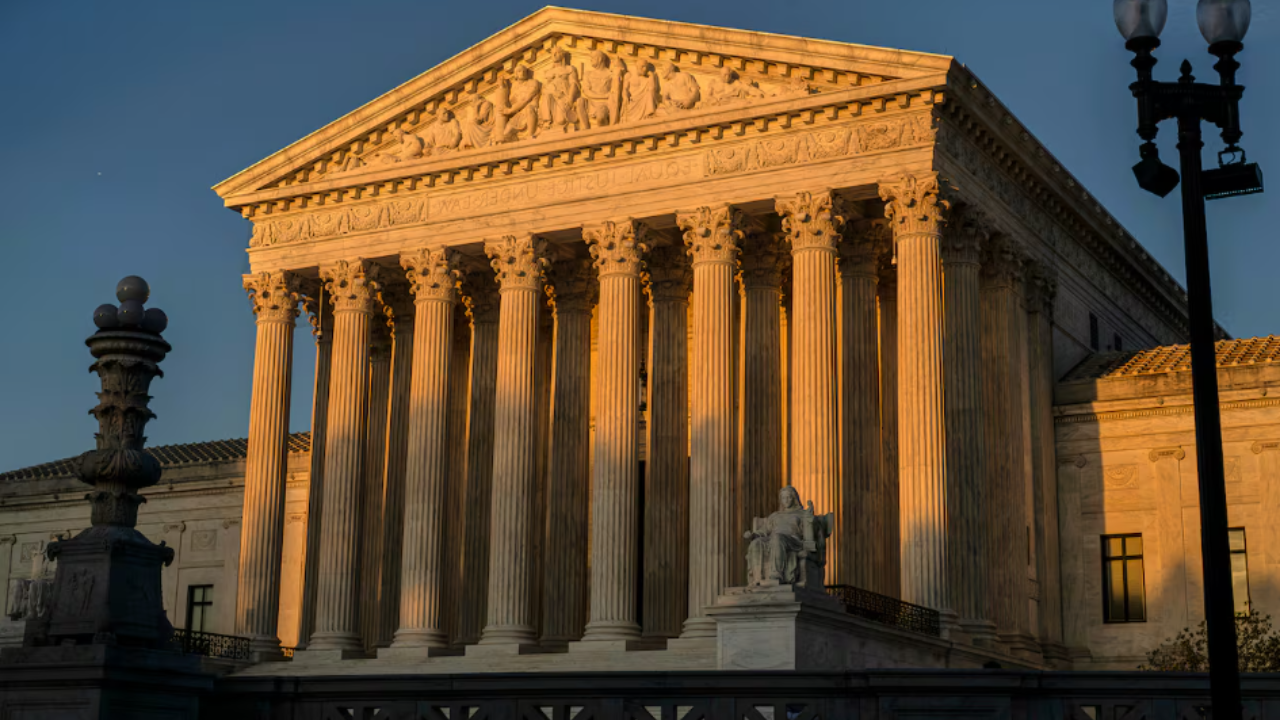
Donald Trump’s administration suffered a significant setback at the Supreme Court on Monday after the justices declined to hear its appeal in a legal battle involving approximately $59 million in federal research grants.
The decision, issued November 16, leaves in place a lower-court ruling blocking the administration’s efforts to terminate funding awarded to researchers across the University of California system.
The case, Trump v. Thakur, emerged from Trump’s sweeping campaign against diversity, equity and inclusion initiatives, which has resulted in federal agencies canceling research grants that officials considered inconsistent with the president’s policy priorities.
The Supreme Court’s official docket recorded the outcome in just two words: “Petition DENIED.”
No justice publicly dissented from the decision.
At the center of the dispute were grants awarded by the National Science Foundation and the National Endowment for the Humanities. The research covered a variety of subjects, including racial equity in science education and opportunities for Indigenous youth to participate in scientific research.
The administration maintained that federal officials possess broad authority to determine which research projects deserve taxpayer funding. According to its legal argument, the government should not be required to continue supporting projects that conflict with the priorities of the elected administration.
But researchers challenging the cancellations argued that the government had crossed a constitutional line by targeting already-approved grants because of the viewpoints associated with the research.
Six University of California researchers brought the lawsuit, contending that the funding terminations violated protections guaranteed by the First Amendment.
In June 2025, U.S. District Judge Rita Lin issued a preliminary injunction requiring federal agencies to restore grants covered by the court’s order.
The dispute subsequently reached the Ninth U.S. Circuit Court of Appeals, which largely upheld the injunction in May 2026.
The appeals court concluded that the researchers were likely to succeed in demonstrating unconstitutional viewpoint discrimination.
Its reasoning drew a distinction between the government’s authority to establish funding priorities and its ability to cancel existing grants because of the perspectives expressed by individual researchers.
That distinction became central to the administration’s request for Supreme Court review.
Trump’s lawyers argued that the lower-court ruling improperly restricted the executive branch’s authority over federal grant programs and could interfere with the administration’s ability to implement its policies.
The researchers, meanwhile, maintained that allowing the government to terminate existing research awards based on perceived political or ideological viewpoints would undermine constitutional protections for free expression.
The financial implications extended beyond the approximately $59 million directly at issue in the appeal.
According to the researchers’ legal filings, more than $324 million in University of California research grants had been terminated between January and June 2025.
The administration’s actions were part of a much broader effort to eliminate federal support for programs associated with DEI policies.
Since returning to the White House, Trump has issued executive orders directing federal agencies to dismantle initiatives that his administration considers discriminatory or ideologically driven.
Those policies have triggered numerous legal challenges involving universities, scientific institutions, government contractors and federal funding recipients.
Monday’s Supreme Court decision represents a victory for the researchers, but it does not constitute a final ruling on the constitutionality of Trump’s broader DEI policies.
The justices declined to review the case rather than issuing a substantive decision resolving the underlying First Amendment dispute.
As a result, the preliminary injunction remains in effect while litigation continues in the lower courts.
The administration may continue defending its position as the case proceeds, but its attempt to secure immediate Supreme Court intervention has failed.
For researchers whose projects were threatened by the cancellations, the decision preserves an important legal protection for now.
For Trump, it marks another courtroom setback in his administration’s effort to reshape federal institutions and redirect government spending according to his political priorities.
Leave a Reply